
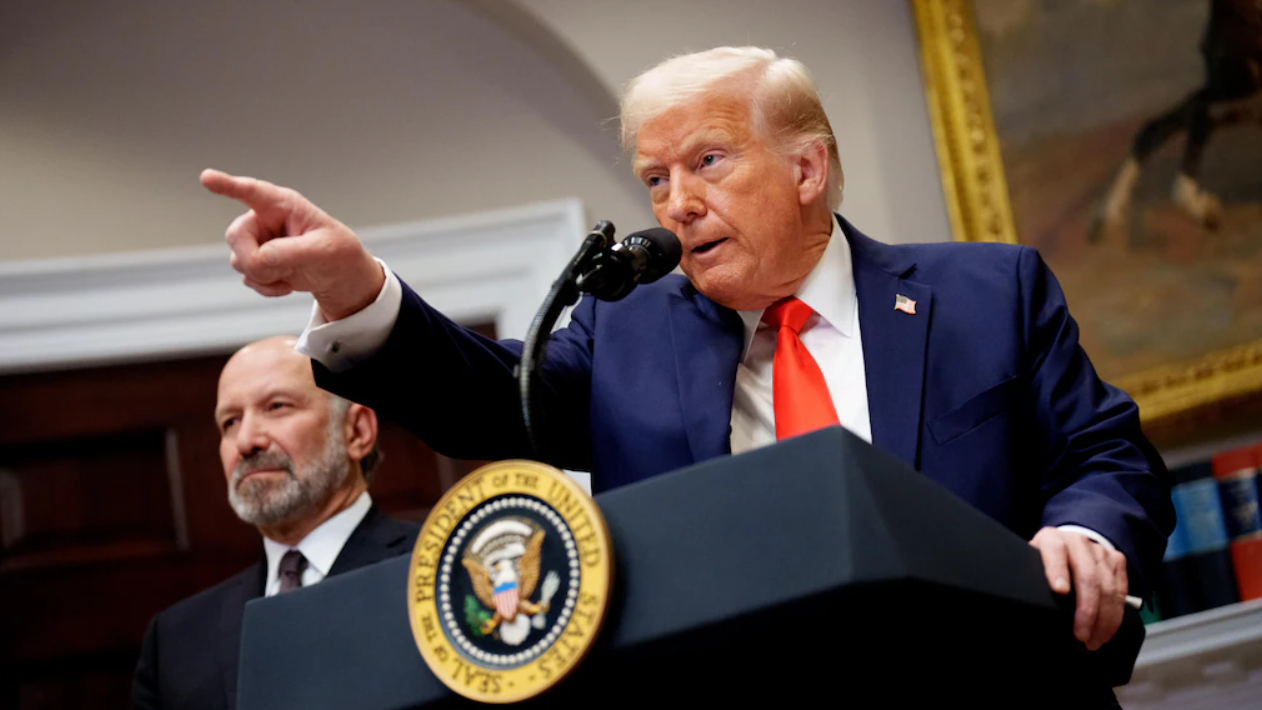
The United States announced a new set of trade tariffs ranging from 10% to 12.5% on 60 trading partners, including Sri Lanka.
Announcing the new tariffs, the Office of the United States Trade Representative (USTR) said the duties were being imposed on countries that had failed to impose and effectively enforce a prohibition on the importation of goods produced with forced labor.
While Sri Lanka was hit with a tariff of 10%, major trading partners such as Japan, South Korea, and dozens of others were slapped with the higher 12.5% tariff by the Donald Trump administration.
Context
These permanent measures replace a temporary 10% global surcharge levied under Section 122 of the Trade Act of 1974, which reached its statutory 150-day limit.
That emergency stopgap was deployed after the U.S. Supreme Court struck down earlier reciprocal tariffs, ruling that executive authority under the International Emergency Economic Powers Act (IEEPA) could not be used to levy broad import duties.
The expiration of those temporary measures required Washington to transition to a distinct, long-term trade mechanism before the statutory deadline lapsed.
Basis for tariffs
To establish this new framework, the USTR initiated broad investigations under Section 301 of the Trade Act of 1974.
The probe evaluated whether target economies allowed foreign forced-labor inputs into their supply chains, creating artificial price advantages that burdened U.S. commerce.
Following months of bilateral consultations and over 1,600 public submissions, Section 301 was formally deployed to institute the new tariff structure.
Gazette
President Anura Kumara Dissanayake issued an extraordinary gazette earlier this month prohibiting the import of any goods produced, mined, or manufactured using forced labor.
Sri Lanka Customs now requires importers to provide documentation certifying that raw materials and inputs enter supply chains completely free of forced labor.
In response to that gazette, industry leaders urged the government to adopt a transparent, risk-based screening model to protect national trade competitiveness while enforcing the new regulations.














Comments
Moderated before publishing. Your email stays private.