
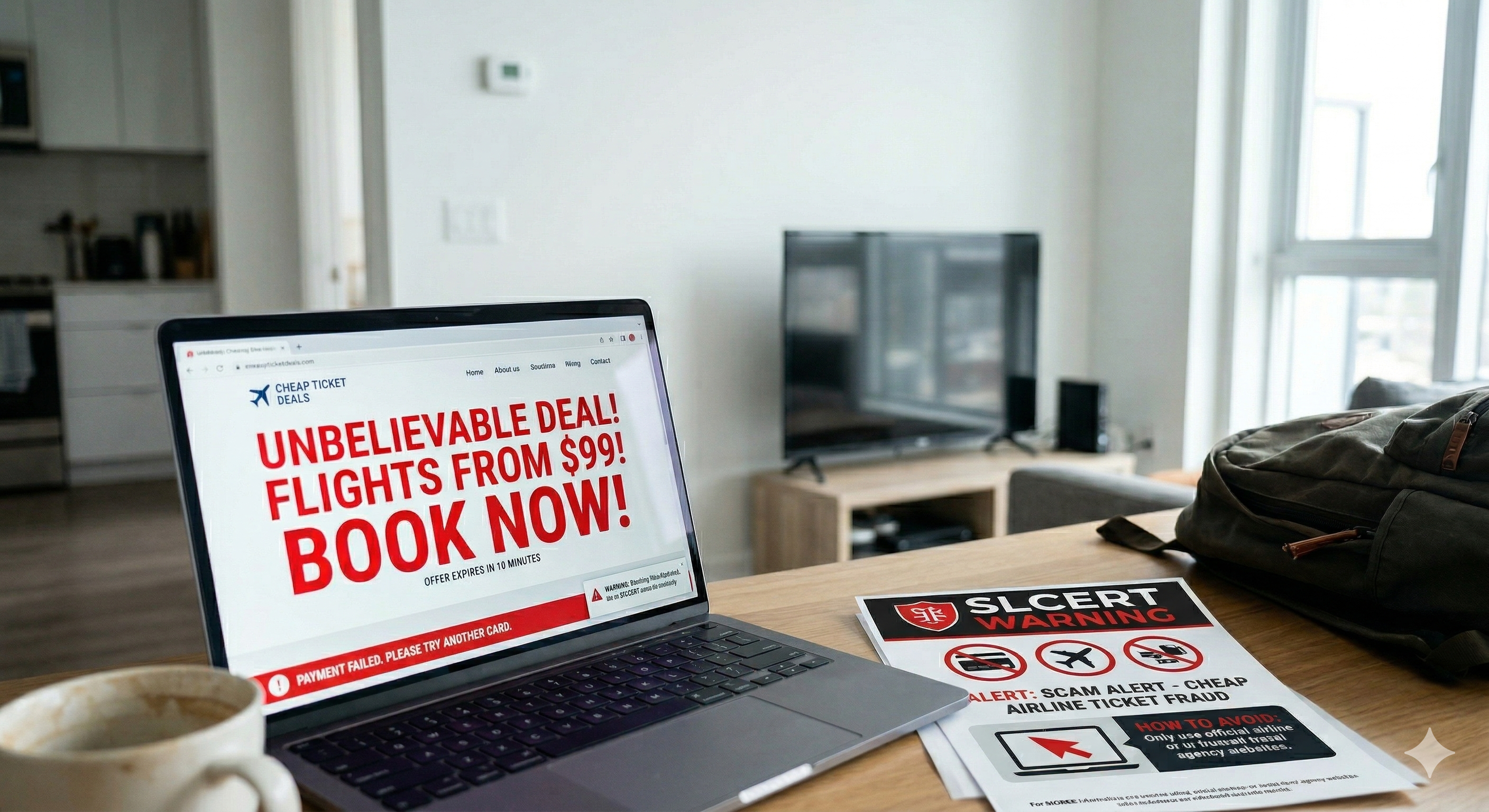
SLCERT has warned the public about an online scam offering overseas travel at low cost.
In a post on their social media pages, SLCERT, the Sri Lanka Computer Emergency Readiness Team, said that individuals had lost between Rs. 500,000 to Rs. 5,000,000 after falling victim to the scam.
According to figures from Sri Lanka Police, 3,100 complaints were made related to online scams in 2025, double the number recorded in the previous year.
He said that last year, complaints related to online scams doubled to 3,100, while 314 suspects were arrested in connection with these incidents.
Here's how the scam works:
Scammers first create fake airline websites that closely resemble official booking platforms and promote them through advertisements offering heavily discounted tickets.
Unsuspecting users click on these ads, visit the fraudulent site, and enter their travel details along with their contact information.
The scammers then reach out via phone, speaking convincingly and directing victims to continue the process through messaging platforms such as WhatsApp.
Victims are persuaded to install a so-called “verification” application from an untrusted source, which is actually malicious software.
Once installed, they are instructed to enable device permissions that give the attackers extensive control over their phones and access to sensitive information.
Finally, victims are asked to pay small registration fees and disclose banking details and one-time passwords, allowing scammers to siphon large sums of money from their accounts.
What to do if you have been scammed online?
Call your bank: In the event of a financial scam, immediately call the customer care number of your bank or payment provider, as indicated in their officially listed contacts and freeze your account or block your card/payment method.
Make a Police complaint: Inform the Police Computer Crime Investigations Division on 0112381045 or Police Headquarters (+94 12421111) and file a complaint at your nearest police station, making sure to get a copy of it.
Document every detail: Try to remember the details of any interactions and correspondence, and make a record of it, taking screenshots and copying any messages, etc.
Also capture transaction IDs, dates, amounts, etc. that you may have shared with the scammer; these details could be invaluable when reporting and resolving the fraud.
Report it to SLCERT: Report the scam to Sri Lanka CERT, by emailing comprehensive details to report@cert.gov.lk. You can also contact their hotline at 101 or +94 11 269 1692 to report cyber incidents, fake websites, or phishing attempts.
















Comments
Moderated before publishing. Your email stays private.