
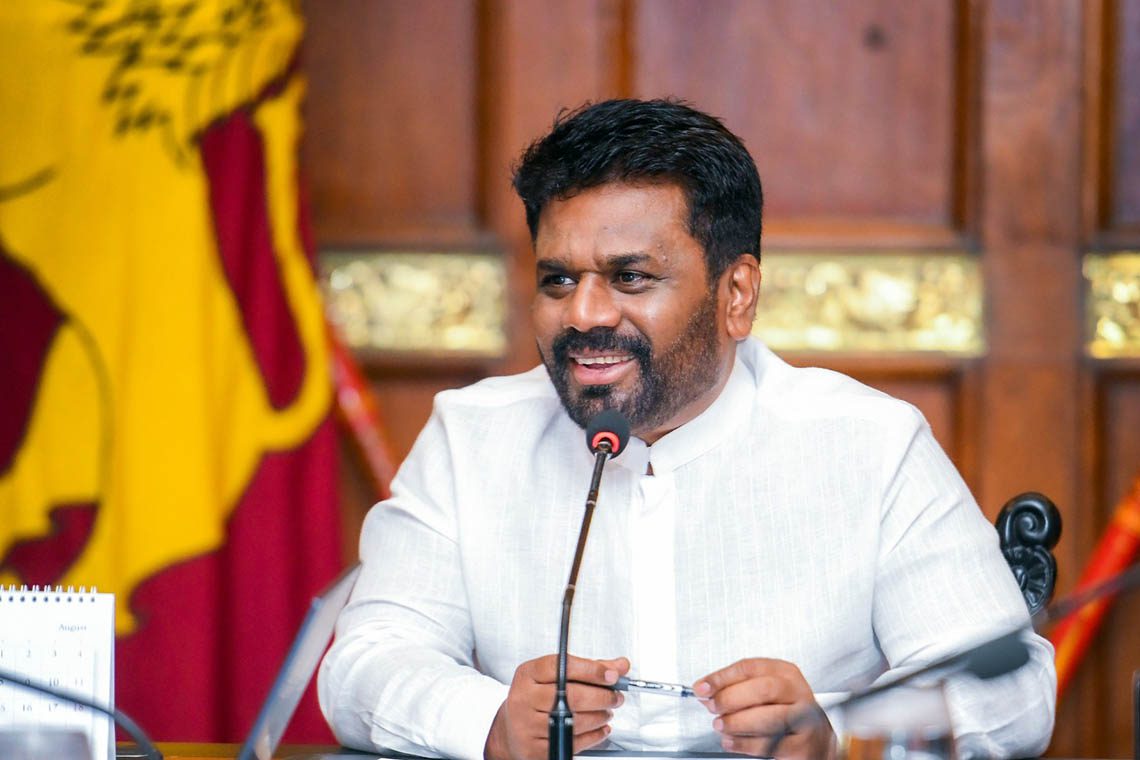
75.5% of the public is satisfied with President Anura Kumara Dissanayake, research by the Centre for Policy Alternatives (CPA) claims.
In contrast, leader of the opposition Sajith Premadasa has drawn a dissatisfaction rating of 64.9%, indicating a stark contrast of opinions about the two leaders.
The President's approval ratings peaked remarkably among minority communities, reaching 94.4% within the Malaiyaha Tamil demographic and 93.4% among Muslim respondents.
Context
These findings were compiled in the newly released "Confidence in Democratic Governance Index (Wave 7)" report, which measures public sentiment against shifting political landscapes.
The national study was conducted by Social Indicator, the professional survey research arm of the Centre for Policy Alternatives (CPA).
Established in 1996, the Colombo-based CPA operates as an independent, non-partisan think tank dedicated to analyzing governance, conflict resolution, and public policy alternatives.
Economic strain
Alongside high executive approval, the index highlights severe economic strain, revealing that 51.4% of Sri Lankans believe their household financial situation has worsened over the past year.
Public opinion is deeply fractured regarding the state's handling of daily financial pressures, leaving the country evenly split between 45.3% who are satisfied and 44.0% who are dissatisfied with cost-of-living management.
This economic discontent is most acutely felt among the majority Sinhala community and residents living within urban sectors.
Presidency reform
On matters of systemic governance, a commanding 64.1% of the population supports the formal abolition of the Executive Presidency.
However, only 23.6% of those surveyed believe the legislative dismantling process should begin immediately, with the largest share viewing it as a secondary priority.
The demand for immediate constitutional restructuring was highest among Tamil respondents, while a quarter of the Sinhala community opposed the abolition entirely.
Provincial polls
The study also reveals strong pressure for grassroots democracy, with 67.0% of Sri Lankans declaring it is critical to hold the long-delayed Provincial Council elections.
This appetite for local governance and regional representation remains remarkably uniform, hovering between 63% and 70% across all four major ethnic groups.
The push for regional polls is led primarily by the island's youth, with 71.0% of respondents aged 18 to 29 classifying the elections as important.










Comments
Moderated before publishing. Your email stays private.