
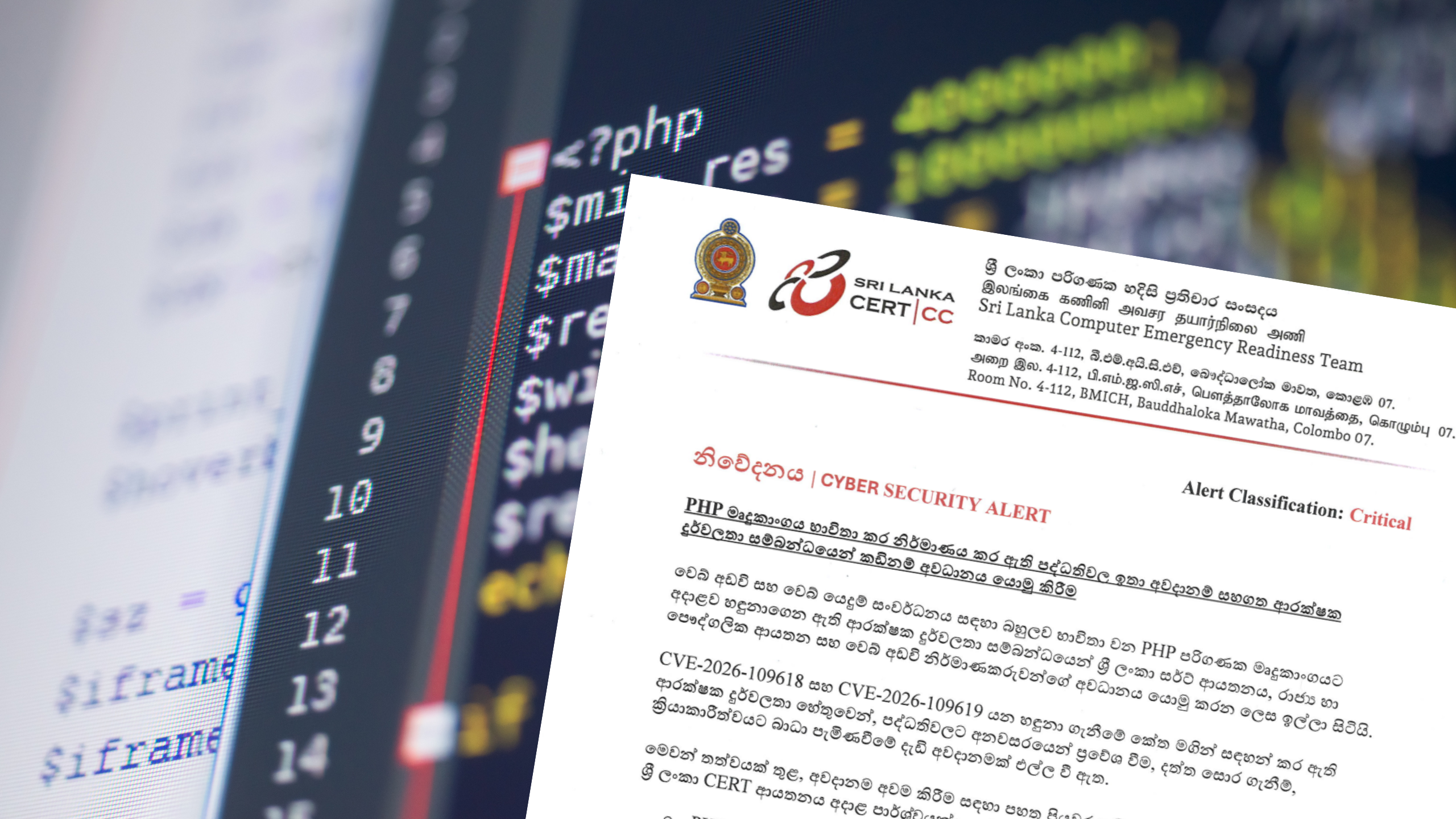
The Sri Lanka Computer Emergency Readiness Team (SLCERT) has urged government institutions, private-sector organisations and website developers to immediately address critical security vulnerabilities affecting systems built using PHP.
SLCERT’s advisory follows the release of urgent security fixes by PHP developers on Wednesday (October 21), after two critical vulnerabilities — present in the software for years — were uncovered using artificial intelligence. PHP users have been urged to “update immediately.”
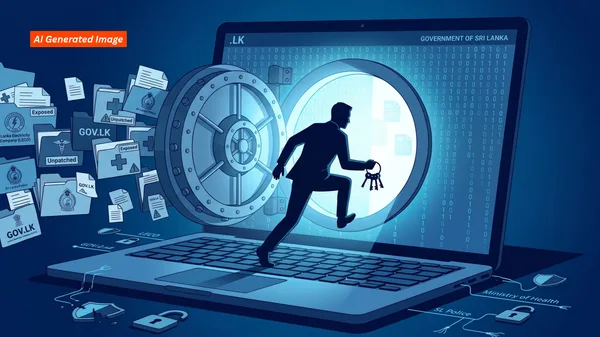
SLCERT warned that the vulnerabilities could expose affected systems to unauthorised access, data theft and disruption of operations.
Background
PHP is a free, open-source programming language widely used to run websites and web applications.
When a visitor loads a page, a server running PHP assembles the content and sends it to the browser.
The vulnerabilities, identified as CVE-2026-109618 and CVE-2026-109619, could allow unauthenticated remote attackers to execute malicious code on affected.
SLCERT advisory
To reduce the risk of exploitation, SLCERT urged users of PHP to:
- Identify all systems and web applications using PHP and verify the versions currently running.
- Immediately apply the security patches issued for these vulnerabilities, following the update instructions on the official PHP website.
- Inspect system logs for unusual activity.
- Restrict internet access to high-risk systems that cannot be updated immediately.
Older PHP versions
The official PHP security fixes cover PHP 8.2 and newer versions. Organisations running PHP 8.1 or older should contact their software vendor for a backported fix or upgrade to a supported version.
The US Cybersecurity and Infrastructure Security Agency (CISA) says systems that cannot be patched immediately should be isolated from the internet until they are secured.
CERT-EU, the European Union’s cybersecurity agency, also advises seeking vendor backports or upgrading to a supported version.











Comments
Moderated before publishing. Your email stays private.