
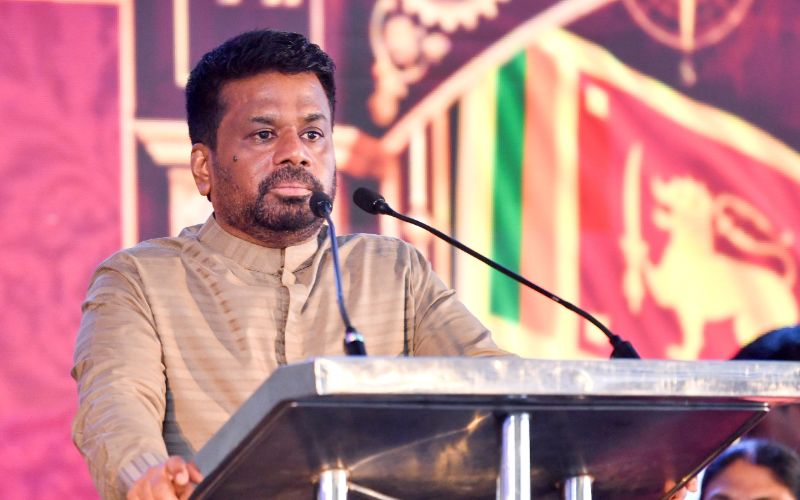
The government is considering closing or amalgamating 34 state institutions deemed unnecessary or inefficient, President Anura Kumara Dissanayake has said.
Speaking at the 100th Annual Conference of the Government Surveyors’ Association, President Dissanayake said that political appointments made in the past had resulted in “excessive staffing at lower levels of the public service,” creating a substantial financial burden.
He said the government aims to build a public service that would be an attractive prospect for “capable and highly qualified professionals.”
Economic recovery claims
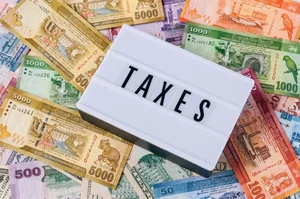
The President said the government had strengthened state revenue considerably, claiming that revenue collection in 2025 reached 110% of the projected target for the first time in Sri Lanka’s history.
He said the government expects to meet its 2026 revenue targets through the Department of Inland Revenue, Sri Lanka Customs and the Department of Excise.
Dissanayake also said the Treasury account, which he said stood at a deficit of about Rs. 700 billion in 2022, now has a positive surplus approaching Rs. 1 trillion.
External-sector pressure
The President said improved revenue had reduced the government’s earlier reliance on money printing and borrowing from the banking system.
He said Sri Lanka recorded a current-account surplus of US$1.8 billion in 2025, which he contrasted with the roughly US$300 million surpluses recorded on only about three occasions since independence, although warning that rising oil-import costs were creating renewed pressure on foreign reserves.
According to the President, Sri Lanka spent US$4 billion on oil imports last year, but had already spent the same amount by the end of August this year, and the 2026 total could exceed US$6 billion by year-end.
Infrastructure plans
Dissanayake said the government was financing several major infrastructure projects through domestic Treasury funds rather than foreign borrowing.
These include the Kurunegala–Galewela, Rambukkana–Galagedara and Kahathuduwa–Ingiriya expressways.
He said the projects were being carried out using public funds, without obtaining foreign loans.
He also said the government plans to begin work next year on an estimated Rs. 600 billion project to electrify the Kelani Valley railway line.
The President acknowledged that even rupee-funded projects require foreign exchange for imported machinery, steel and other construction materials.
He said capital expenditure is expected to increase from Rs. 1,330 billion this year to Rs. 2,000 billion next year, increasing the need to earn dollars and limit dollar outflows.
Public-sector salaries
The President said the 2025 Budget provided for public-sector basic salary increases in three phases, in 2025, 2026 and 2027.
He said each phase would cost Rs. 110 billion, resulting in an additional annual salary burden of Rs. 330 billion by 2027 compared with 2024.
Dissanayake said no further basic-salary increase is planned in the 2028 Budget, allowing greater consideration to be given to allowances.
Survey Department
Turning to the surveying service, the President said the government was prepared to allocate Budget funds for modern technological equipment, provided the department submits an assessment identifying its requirements.
He also said the government would examine human-resource development, allowances and possible amendments to the surveying service minute.
Deputy Minister of Land and Irrigation Aravinda Senarath, MP Ruwan Thilaka Jayakody, Ministry Secretary D. P. Wickramasinghe, Surveyor General T. M. I. Thilakarathna and members of the Government Surveyors’ Association attended the event.








Comments
Moderated before publishing. Your email stays private.