
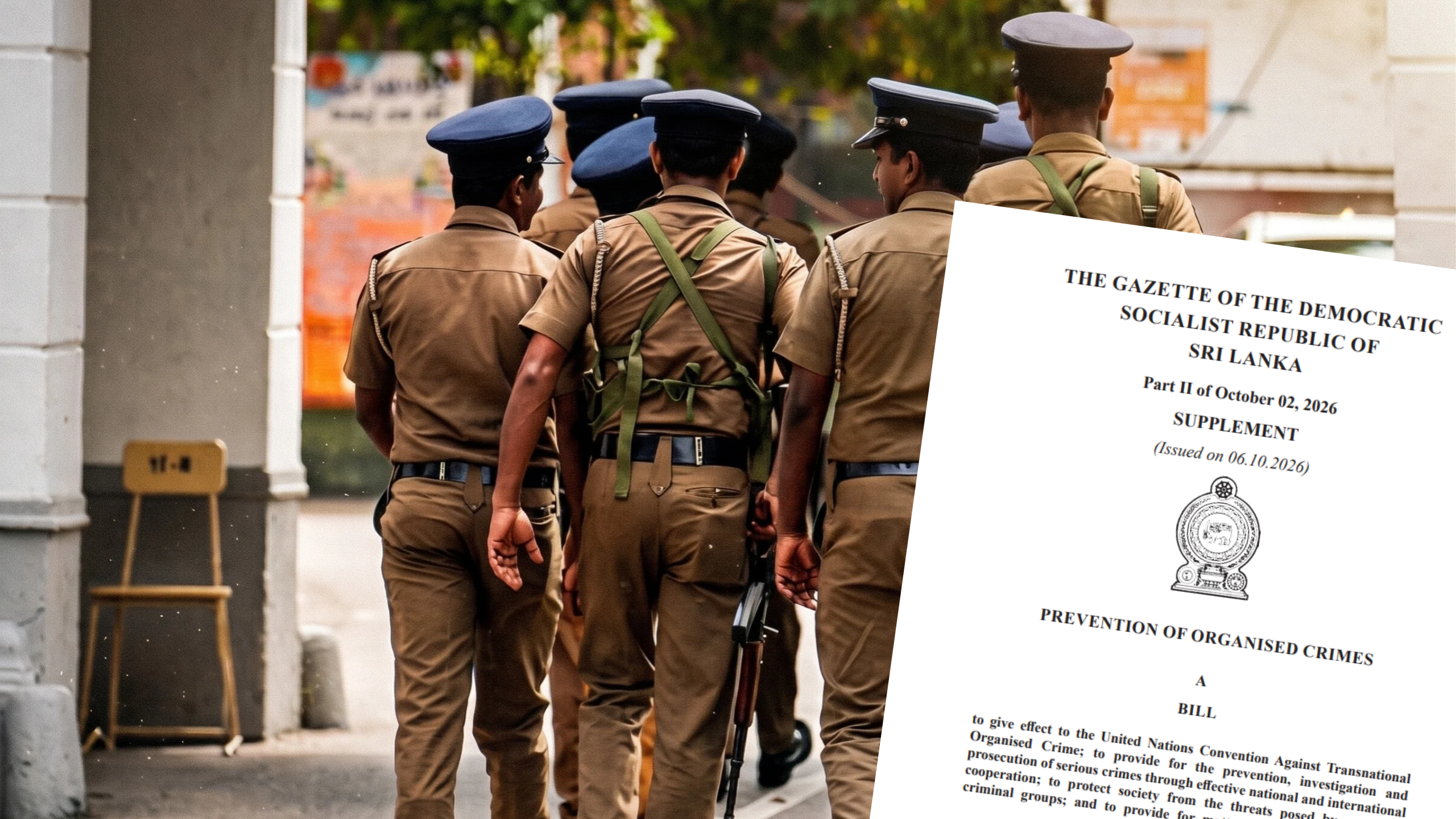
Human Rights Watch has raised serious concerns over Sri Lanka’s proposed Prevention of Organised Crimes Bill, saying that it “risks enabling arbitrary detention, torture, and other rights violations”.
In a statement released today (29), the international human rights watchdog said the draft would further weaken Sri Lanka’s compliance with its GSP+ human rights commitments if passed into law.
HRW is calling on the government to halt the legislation and conduct transparent, public consultations before introducing any new security framework.
The Bill
The government gazetted the Prevention of Organised Crimes Bill in late September and formally submitted it to parliament on 20 October.
Presented as giving domestic legal effect to the UN Convention against Transnational Organised Crime, the draft establishes a parallel judicial mechanism targeting offences punishable by four or more years in prison.
Authorities argue the framework is necessary to combat underworld networks, but rights groups warn its broad reach pulls ordinary, non-violent offences into an extraordinary legal track.
Concerns
HRW warns the draft law strips away fundamental due process safeguards by authorizing the Ministry of Public Security to detain suspects for up to a year without magistrate review.
The watchdog says allowing confessions made to police officers to be admitted as evidence in court creates a direct, dangerous incentive for torture and coercion.
HRW cautions that by severely curbing judicial discretion over bail and remand, the bill effectively replicates the abusive detention framework long condemned under the Prevention of Terrorism Act.
HRW warns the bill’s broad scope catches any offence punishable by four or more years of imprisonment, pulling ordinary non-violent acts into an extraordinary parallel justice system.
The organisation raises alarm that the draft permits authorities to establish criminal group membership through loose associative markers – including dress, tattoos, or attending meetings – rather than proven criminal conduct.
HRW states these vague definitions give state agencies sweeping discretion to target activists, trade unionists, and peaceful protesters under the guise of combating organized crime.
GSP+ Stakes
HRW Asia Director Elaine Pearson stressed that the European Union should explicitly notify Colombo that passing this bill will directly breach its binding human rights commitments under the GSP+ trade scheme.
The GSP+ framework grants Sri Lanka tariff-free access to the European market for over 7,000 export items – serving as a multi-billion-dollar lifeline that underpins vital domestic industries, particularly apparel, fisheries, and manufactured goods.
The EU has repeatedly conditioned this preferential access on the repeal of abusive counter-terror legislation, having previously warned Colombo that the PTA's prolonged detentions and lack of due process fundamentally violate international rights treaties.










Comments
Moderated before publishing. Your email stays private.