

An expert committee appointed with Cabinet approval is formulating sweeping new labour law reforms to update Sri Lanka’s legal framework in line with current and future workplace realities.
Ministry of Labour officials briefed Members of Parliament on the proposed legislation, which covers employment contracts, working hours, leave, overtime, maternity protection, paternity leave, and preventing workplace violence and harassment.
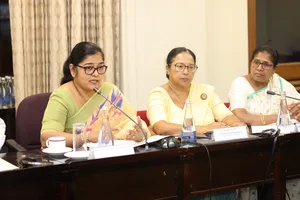
The special session took place at Parliament on November 18 under the patronage of Minister Dr. Anil Jayantha, Chairman of the Ministerial Consultative Committee on Labour Affairs.
Background
Ministry officials explained to the committee that the primary objective of this reform initiative is to establish a unified legal framework by reviewing and consolidating existing major labour statutes, a statement from the Parliament’s Communications Department said.
The proposed legislative overhaul is structured around four foundational pillars: labour standards, occupational health and safety, industrial relations and disputes, and trade union rights.
Officials noted that the first four drafted chapters of the proposed Labour Standards Bill have already been published on the Ministry of Labour’s official website, labourmin.gov.lk.
Worker protections
During the parliamentary briefing, ministry representatives detailed specific legislative provisions designed to safeguard the rights of part-time employees across the country.
The draft framework also introduces measures aimed at the formalisation of employment contracts, expanded social security benefits for workers, and ensuring safe working environments.
Deputy Minister of Labour Mahinda Jayasinghe joined fellow parliamentarians and a delegation of senior Ministry of Labour officials at the consultative meeting.
Public consultation
Authorities confirmed that making the preliminary chapters accessible online allows members of the public and relevant stakeholders to submit formal views and proposals.
Feedback gathered from trade unions, employers, and employee representatives will be taken into consideration as officials continue formulating the final legislation.
The consultative process aims to ensure broad stakeholder input before the consolidated labour statutes are finalised for enactment.











Comments
Moderated before publishing. Your email stays private.