

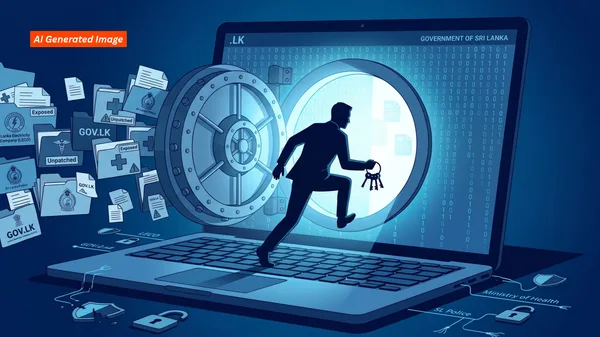
At least 80 websites run by Sri Lanka’s government, state-owned utilities and state-owned companies are vulnerable to hackers because they use severely outdated software, researcher
Dr. Sanjana Hattotuwa has warned.
Dr. Hattotuwa said on Saturday (October 24) that he had written to Prime Minister Harini Amarasuriya and Opposition Leader Sajith Premadasa about the vulnerabilities.
The affected websites span ministries, provincial councils, municipal authorities, the health sector and critical national infrastructure.
Critical vulnerabilities
According to Dr. Hattotuwa, 61 of the 80 websites – more than three-quarters – run software versions so old that their developers stopped issuing security updates years ago.
This means the websites and the content they hold were exposed to cybercriminals before this week’s global cybersecurity alert, and remain exposed because no official fixes are available.
The 80 websites represent only a minimum figure, as the scan could identify only sites that publicly disclose their software versions.
Infrastructure at risk
The warning follows the October 21 disclosure of “PHP2Shell,” two severe vulnerabilities in PHP, the software used to build around 70% of the world’s websites.
The flaws could allow an attacker to take control of the server behind a website without a password.
Dr. Hattotuwa noted that while the United States, United Kingdom and other governments moved to patch vulnerable systems or take them offline, Sri Lanka’s disaster-response website runs on software that is more than a decade old.
Sensitive data exposed
Several exposed systems are not merely public-facing websites but working applications holding information on citizens and public servants.
They include health-sector staff systems, a portal where doctors log in using national identity card numbers, and systems linked to the identity registry.
The sites belonging to critical national infrastructure span electricity, ports, telecommunications, transport, disaster management, national identity and defence.
Demands for action
While SLCERT issued a general advisory on October 21, Dr Hattotuwa said he could find no public evidence that affected institutions had been identified, notified or given deadlines.
He also referred to the August 2023 ransomware attack on the Lanka Government Cloud, which destroyed three months of email across an estimated 5,000 government accounts.
Dr. Hattotuwa urged the Prime Minister to direct affected institutions to install fixes or temporary protections within 48 hours, or go offline.
Recommended deadlines
He also called for institutions to determine within a week whether they had already been compromised.
He further urged that all websites running retired software move to supported versions or be closed within three months.
The researcher said the government should treat the issue as urgent because unsupported systems leave citizen data and public institutions exposed to cyberattacks.











Comments
Moderated before publishing. Your email stays private.